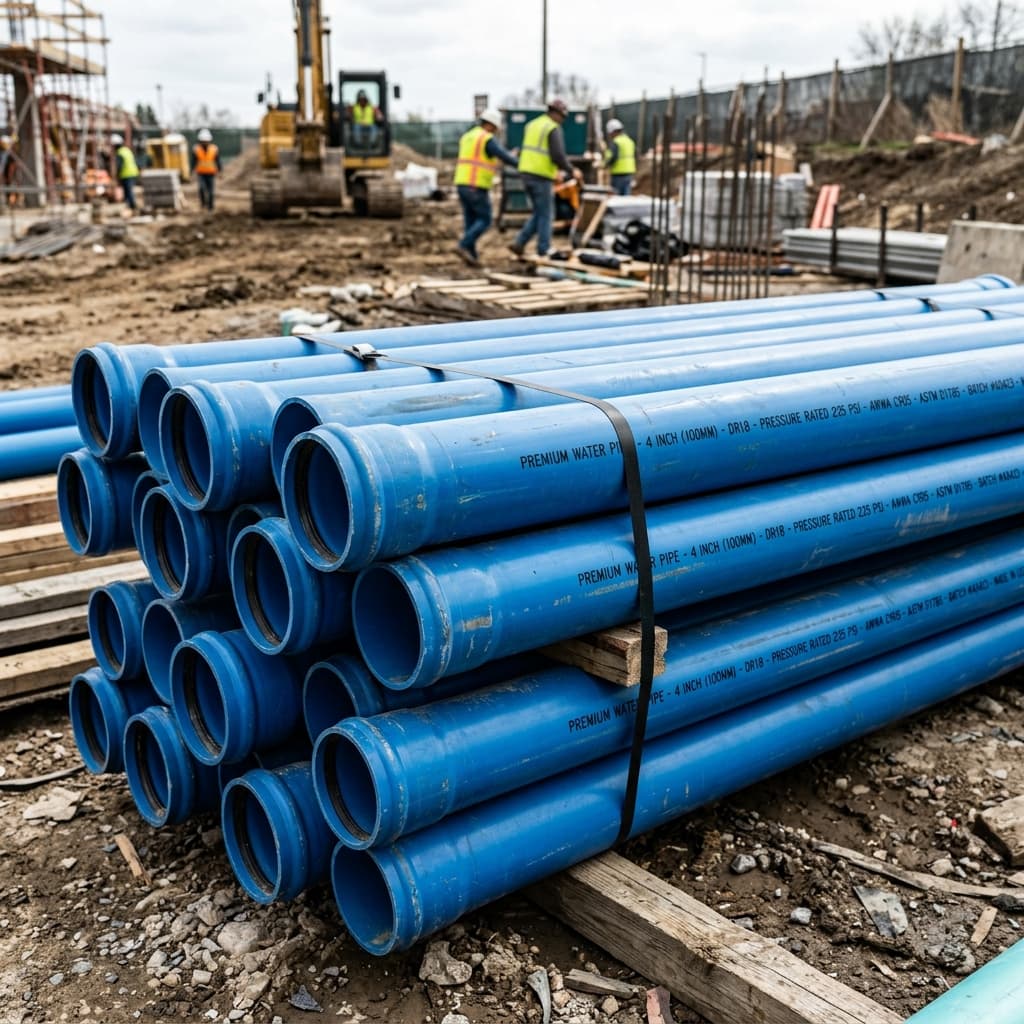
Choosing the wrong pipe isn’t just a technical mistake — it’s a financial one. From leakages and pressure failures to long-term maintenance costs, the type of pipe you select directly impacts the performance and durability of your entire system. Yet, many buyers, contractors, and even businesses often confuse between PVC, CPVC, and HDPE pipes.
This guide breaks it down clearly — so you choose right the first time.
| Feature | PVC | CPVC | HDPE |
|---|---|---|---|
| Temperature | Cold Water Only | Hot & Cold Water | Cold & Industrial |
| Flexibility | Rigid | Rigid | Highly Flexible |
| Best For | Agriculture, Drainage | Home Plumbing | Underground, High Pressure |
Go with PVC Pipes
Go with CPVC Pipes
Go with HDPE Pipes
👉 These mistakes cost more than the pipe itself.
Many buyers focus only on initial cost, but smart buyers focus on:
For example:
There is no "best pipe" — only the right pipe for the right application.
At Euro Pipes Industries, we always recommend solutions based on:
When deciding on PVC vs CPVC vs HDPE pipes, remember that reliability matters more than cost savings.
Whether you are a Contractor, Builder, Dealer, or Farmer, our team can help you select the right piping solution for your requirement.
CPVC pipes are highly recommended for home plumbing as they can handle both hot and cold water, offering a long lifespan with minimal maintenance.
Yes. PVC can deform when exposed to hot water, whereas CPVC is specifically designed to handle high-temperature water distribution.
HDPE pipes are highly flexible, tough, and capable of withstanding extreme pressure and harsh underground environments, making them ideal for industrial use.
While all three (PVC, CPVC, HDPE) offer excellent longevity, HDPE typically has the longest lifespan in demanding underground and industrial settings. However, PVC and CPVC will easily last decades in their appropriate applications.